How The Brain Control Speech And Language: A Guide For Parents
https://www.triumphtherapeutics.com/wp-content/uploads/2025/08/How-The-Brain-Control-Speech-And-Language-A-Guide-For-Parents-Triumph-Therapeutics-Pediatric-Therapy-Clinic-Washington-DC-Aug02-01-2025.jpg 710 379 Triumph Therapeutics Triumph Therapeutics https://www.triumphtherapeutics.com/wp-content/uploads/2025/08/How-The-Brain-Control-Speech-And-Language-A-Guide-For-Parents-Triumph-Therapeutics-Pediatric-Therapy-Clinic-Washington-DC-Aug02-01-2025.jpg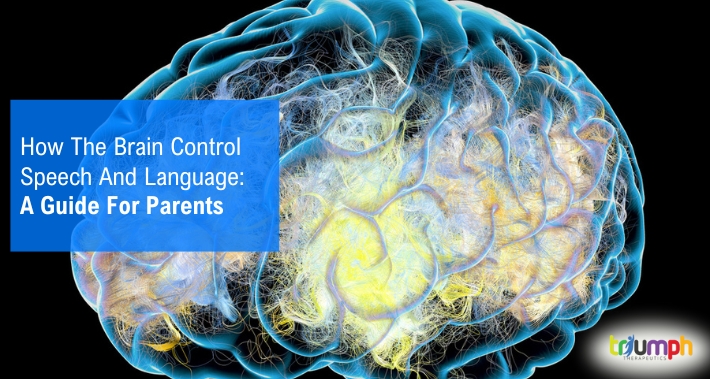
The human brain is, quite possibly, the most complex thing nature has ever produced.
We’ve dedicated eons to understanding our brains.
The fact that we’re able to dedicate ourselves to that study and share our findings is proof that the brain is an incredible thing.
We’re able to communicate with each other in so many different ways, including through scientific discovery.
We’ve even discovered which parts of the brain control our ability to learn, speak, and sign language.
But what happens when there are differences in our ability to communicate?
In that case, a pediatric speech and language therapist can help.
Here at Triumph Therapeutics, we offer treatment and support for a wide variety of concerns related to childhood development.
That includes, of course, speech.
But these things are all connected.
Children who need support in developing their speech and language skills will often also need support from a pediatric physical therapist or a pediatric occupational therapist.
Fortunately, we offer all three of these at our pediatric therapy clinic in Washinton, DC.
In this article, we’re taking a closer look at the brain.
- What part of the brain controls speech?
- What happens when there’s an injury to that part of the brain?
- And how can a speech therapist help?
Continue reading to learn more.
What Areas Of The Brain Are Responsible For Speech And Language?
It’s worth noting that there’s a lot about the brain we still don’t understand.
After all, there isn’t much in nature that’s more complex than the human brain.
Researchers are continuing to explore these areas, and so this article might be out of date in the future.
The major functions of speech and language are:
Articulation: the pronunciation of words or phonetic capabilities.
Comprehension: the understanding of sounds, words, and sentences.
Fluency: the timing, tones, and patterns of speech.
We’ve begun to break down the parts of the brain to better understand which area is responsible for what.
Here’s some of what we understand about these areas.
1. Cerebellum
You might’ve heard of the cerebellum already.
It’s located at the back of your brain, next to your brain stem.
It’s the part of your brain responsible for motor function.
From a communication perspective, this includes many different things, like:
- Opening and closing your mouth
- Controlling your tongue
- Smiling, frowning, and other facial expressions
- And others
We now believe the cerebellum is more important to speech and language than we used to.
Damage tothe cerebellum makes it difficult to move these muscles ‘normally’ and has an impact on articulation and fluency.
2. Broca’s Area
The Broca’s Area is located in the brain’s frontal lobe, usually on the left side.
It’s the most active right before you speak, helping you convey thoughts and ideas by turning them into words.
It also passes information to another part of the brain, the motor cortex – but more on that in a moment.
Damage to Broca’s area causes a type of aphasia called Broca’s aphasia, or nonfluent aphasia.
Broca’s aphasia causes the following symptoms:
- Slurred words
- Difficulty producing sounds or speech
- Slowed speech
- Short sentences, often less than 4 words
3. Motor Cortex
The motor cortex, located in the front of your brain, coordinates the movements of your mouth, tongue, and throat.
When it receives information from Broca’s area, it helps you turn your thoughts into speech.
Damage to the motor cortex may create difficulties in moving the muscles you need to articulate speech sounds.
4. Arcuate Fascilicus
The arcuate fascilius is a band of nerves connecting your Wernicke’s area to your Broca’s area.
It helps you form words, understand concepts, and speak clearly.
When it’s damaged, you may not be able to repeat words you’ve previously heard.
This is known as conduction aphasia.
5. Wernicke’s Area
Your Wernicke’s area is located in the temporal lobe behind your ears.
It aids in understanding and processing both spoken and written language.
Damage to Wernicke’s area may cause you to speak in long, jumbled sentences with no meaning.
You may make up nonsensical words that you don’t realize others can’t understand.
This is called Wernicke’s aphasia, or fluent aphasia.
How Can A Speech Therapist Help With Traumatic Brain Injury?
Traumatic brain injuries (TBIs) can cause various kinds of speech and language disorders.
If your child has had a traumatic brain injury, it can feel overwhelming.
But the good news is you’re not alone.
We’ve come a long way in our understanding of how the brain works in relation to speech and language.
Support from a pediatric speech therapist can help your child develop their speech and language skills, so they can communicate with confidence.
The first step is an evaluation of your child’s needs.
In particular, your child’s speech therapist will look at your child’s:
- Spoken language skills
- Reading and writing skills
- Verbal comprehension
- Motor skills
- Swallowing skills
- And more
They will also take the time to speak with you about your specific concerns.
It’s a good idea to bring any diagnoses your child has, as well as documentation from any other healthcare providers you’ve seen.
From there, your child’s speech therapist will put together a treatment plan designed to address their unique needs.
pediatric speech therapy for traumatic brain injuries provides a safe environment for your child to practice their speaking skills.
Because of the nature of traumatic brain injuries, every child is different.
In many cases, children can learn or regain some or all of their expressive and receptive language skills.
However, in more serious cases, your pediatric speech therapist can offer support through augmentative and alternative communication methods.
Our clinic also offers pediatric physical therapy for traumatic brain injuries, as well as occupational therapy.
So regardless of what your child’s needs are, we’re here to help.
The goal is to help your child retain their ability to communicate, as much as they’re able.
Book Your Appointment With Our Pediatric Therapy Clinic Today
The human brain is a remarkable organ, and even when it’s been injured, there’s still so much potential for healing and growth.
If your child is experiencing speech or language challenges following a traumatic brain injury, support from a pediatric speech therapist can make a real difference.
Our understanding of the brain and how it can affect speech means we can determine what type of speech therapy is best suited to your child’s needs.
With a personalized therapy plan and a compassionate care team, your child can regain skills, build confidence, and continue moving forward in their development.
You don’t have to go through this alone.
At Triumph Therapeutics, we’re here to support your family every step of the way.
Book your appointment with our pediatric clinic today and let’s work together to help your child thrive.